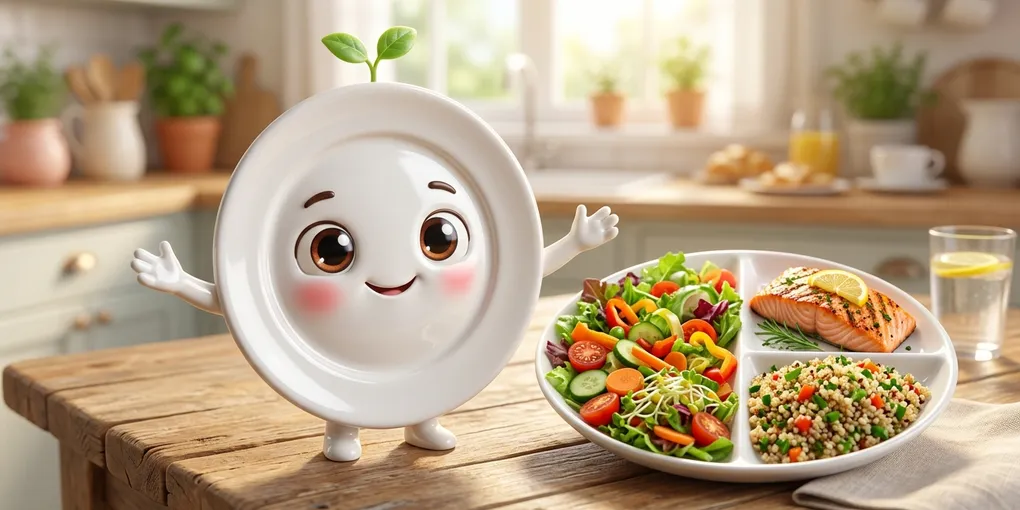
The Harvard Healthy Eating Plate: A Beginner’s Guide
The evidence-based gold standard of balanced nutrition: 1/2 vegetables, 1/4 protein, 1/4 whole grains. No kitchen scales required.
When it comes to healthy eating, most people picture a kitchen scale, meal prep containers with dry chicken breast, and the exhausting chore of logging calories into a mobile app. But there is a far more natural, scientifically proven, and sustainable approach: The Harvard Healthy Eating Plate.
Developed by nutrition researchers at the Harvard T.H. Chan School of Public Health, this visual blueprint was designed as a modern, evidence-based alternative to outdated food pyramids. For people looking to stop calorie counting, it provides a permanent, stress-free framework.
The Core Concept: The 1/2, 1/4, 1/4 Rule
Instead of obsessing over gram measurements, imagine an ordinary 9-inch (22-24 cm) dinner plate and visually divide it into three primary sections:
1. Half of Your Plate (1/2) - Vegetables, Greens & Fruits
- Why it matters: Vegetables and fruits provide essential dietary fiber, vitamins, minerals, and protective antioxidants. Fiber physically expands stomach volume to signal fullness, blunts post-meal glucose spikes, and nourishes your gut microbiome.
- Top picks: Broccoli, leafy spinach, arugula, zucchini, bell peppers, tomatoes, cucumbers, asparagus, green beans, and berries.
- The potato exception: In the Harvard guideline, potatoes and french fries do not count as vegetables due to their rapid glycemic impact; treat them as starchy carbohydrates.
2. One Quarter of Your Plate (1/4) - High-Quality Protein
- Why it matters: Dietary protein supplies amino acids to rebuild muscles, synthesize hormones, and support immune function. It also promotes the highest satiety of any macronutrient.
- Top picks: Fatty fish (salmon, trout, mackerel), skinless poultry, eggs, tofu, edamame, lentils, chickpeas, and black beans.
- Limit: Heavily processed meats (bacon, cold cuts, hot dogs).
3. One Quarter of Your Plate (1/4) - Whole, Intact Grains
- Why it matters: Whole grains provide sustained, gradual energy without the dramatic insulin spikes associated with refined white flour.
- Top picks: Quinoa, oats, buckwheat, wild or brown rice, barley, and whole-wheat pasta or sourdough bread.
Added Bonus: Healthy Fats & Hydration
- Drizzle 1-2 teaspoons of cold-pressed extra virgin olive oil or avocado oil over salads.
- Drink plain water, sparkling water, or unsweetened tea and coffee throughout the day. Minimize sugary sodas and fruit juices.
3 Real-Life Meal Examples
Balanced Breakfast
- 1/2: A handful of baby spinach, half an avocado, and cherry tomatoes.
- 1/4: A 2-egg scramble or tofu scramble.
- 1/4: A slice of toasted artisan whole-grain sourdough.
Power Lunch Bowl
- 1/2: Crisp romaine lettuce, sliced cucumbers, and grated carrots with olive oil.
- 1/4: Grilled lemon-herb chicken breast or baked salmon fillet.
- 1/4: Fluffy steamed quinoa or brown rice.
Cozy Dinner
- 1/2: Roasted broccoli and zucchini with garlic and herbs.
- 1/4: Pan-seared cod or sautéed lentils.
- 1/4: Baked sweet potato cubes.
Verify Your Plate in 3 Seconds with AI
If you don’t want to eyeball portions or you are dining out at a restaurant, PlateTracker automates the process. Simply snap a photo of your plate: our multimodal vision AI instantly determines your sector proportions and displays your meal balance in seconds.
Sources
- Harvard T.H. Chan School of Public Health: Healthy Eating Plate & Healthy Eating Pyramid. https://www.hsph.harvard.edu/nutritionsource/healthy-eating-plate/
- Mozaffarian, D. (2016). Dietary and Policy Priorities for Cardiovascular Disease, Diabetes, and Obesity: A Comprehensive Review. Circulation, 133(2), 187-225.
- World Health Organization: Healthy Diet Fact Sheet. https://www.who.int/news-room/fact-sheets/detail/healthy-diet
Check Your Plate Balance by Photo
Snap your meal in PlateTracker. AI determines Harvard Plate proportions and nutrients in 3 seconds without scales.